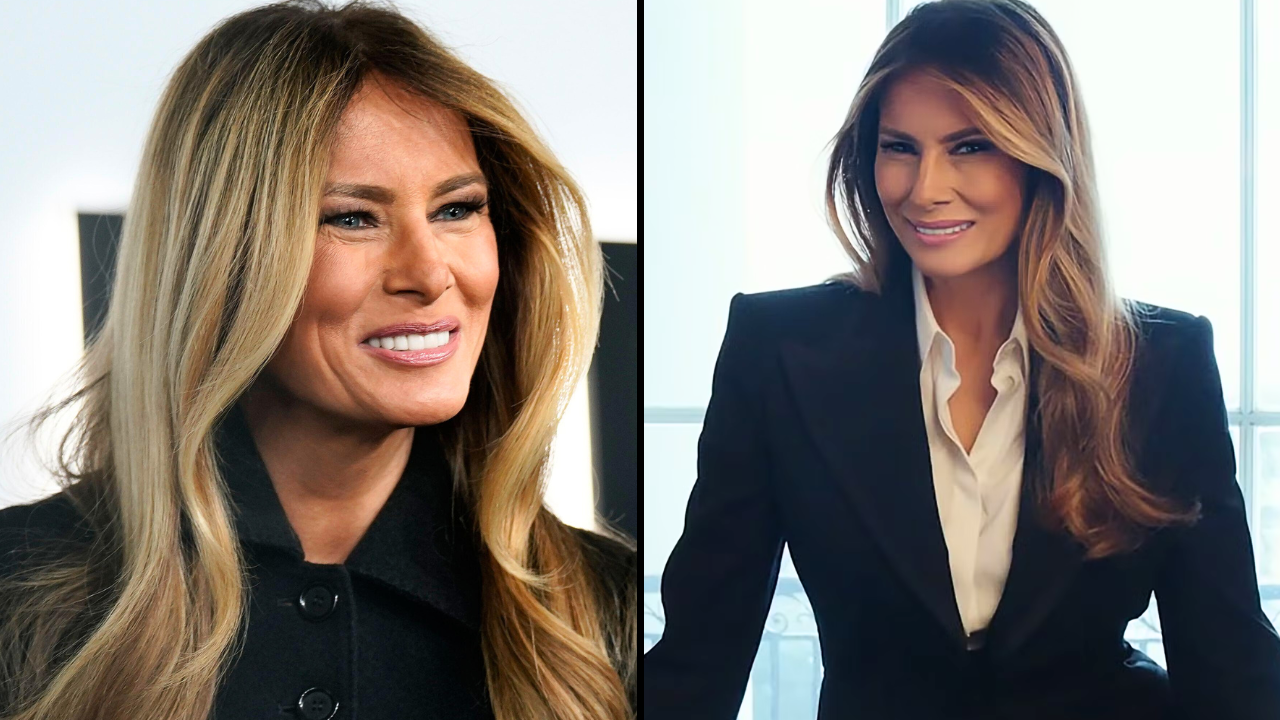
People are calling the new Melania movie ‘the worst film of the year’ – while others insist it’s a misunderstood ‘masterpiece.’ So what’s the truth? Is it actually worth watching, or is this one film you’re better off skipping?
The new documentary, co-produced by Melania herself, promises viewers an intimate look at her life in the days leading up to her husband’s 2025 inauguration.
“Everyone wants to know, so here it is,” she says in the opening voiceover. “I want to show the American people my journey from private citizen to First Lady.”
So far, the reaction has been almost universally harsh. The film is currently sitting at just 11% on Rotten Tomatoes, alongside an ‘Overwhelming Dislike’ Metascore of 5.
On user-led platforms, the response has been even more extreme, with Melania holding a 1.4/10 rating on IMDb and a 1.1/5 rating on Letterboxd, placing it among the worst-rated releases of the year.
What’s striking is the gap between critics and audiences. While professional reviewers have largely panned the film, Rotten Tomatoes’ audience score sits at a sky-high 98%, underlining just how polarising Melania has become.
The timing of the release has intensified the reaction, with anything connected to the President now primed to provoke strong responses before the film is judged on its own merits. Off-screen controversy around the choice of director has also added to the noise.
With critics calling it a disaster and audiences hailing it as a must-watch, the only way to cut through the hype and the hate was to see it for ourselves.
So… is Melania actually worth your time, or one to skip? We went to a screening to find out.
‘I will move forward with purpose, of course, with style’
It was a rainy Thursday evening in Manchester, UK, when I booked a last-minute ticket for the only screening in the city.
When I checked the seating map, not a single seat was taken – a 320-seat screen, all to myself. Or so it seemed.
When I arrived, I was surprised to see a handful of people were already dotted around the room: a woman sitting alone a few rows ahead, and a couple sprawled across the very back row, draped over each other like they were settling in for a long night.
It’s not my first choice of venue. I once watched a couple get escorted out for getting a little too hands-on during Beetlejuice 2, and quietly hoped history wouldn’t repeat itself.
It was a far cry from the world of opulence I was about to spend the next two hours watching unfold on screen.
Style is the film’s guiding principle. Above all else, it cares about how things look.
“I will move forward with purpose, of course, with style,” Melania reveals, in her thick Slovenian accent.

Melania, who moved to the US in 1996 at the age of 27, is presented as poised, polished and immaculately put together.
The camera lingers on the details: the tailoring, the fabrics, the sky-high heels. There are close-ups of fittings and final looks, an almost reverent attention paid to how she is styled for the inauguration.
Classy. Controlled. Carefully curated. The film repeatedly frames Melania as doing what no First Lady has done before – and doing it better, grander, and on a bigger scale.
The implication is constant: this is historic, unprecedented, and driven by her vision and control.
Trump, by contrast, appears only sparingly. But when he does, the film briefly lifts. His presence cuts through the careful staging with blunt energy – what you see is very much what you get. He says what he thinks, often without the filter that defines the rest of the documentary’s tone.
That lack of polish brings an unexpected dose of humor and humanity to an otherwise highly controlled film. In a documentary so intent on presentation, Trump’s unscripted moments feel oddly grounding – and, at times, more revealing than the portrait the film is trying to construct.
A few of his comments draw quiet laughs from the audience, myself included. At times, it feels less like a political documentary and more like an episode of The Kardashians – glossy, tightly managed, and happy to smooth over hard truths.
The rise (and fall) of power
“For us to live any other way was nuts. To us, those goody-good people who worked s****y jobs for bum paychecks and took the subway to work every day, and worried about their bills, were dead. I mean, they were suckers.”
That line isn’t spoken during the 104-minute runtime of Melania. But it captures a worldview that the film repeatedly drifts towards – one of wealth, distance from ordinary life, and a glossy detachment from the realities most people navigate day to day.
In that sense, Ray Liotta’s immortal Goodfellas monologue wouldn’t feel wildly out of place in this nearly two-hour, highly curated love letter to opulence.
Goodfellas charts the real-life rise and fall of Henry Hill, a small-time kid from Brooklyn who grows up idolizing gangsters and ends up living large in the mob – before it all inevitably unravels, and he turns FBI informant.
It’s widely regarded as one of the greatest films ever made. From Joe Pesci’s Oscar-winning performance to Martin Scorsese’s slick direction, razor-sharp script and iconic moments including Tommy’s ‘Funny how?’ monologue, Goodfellas didn’t just perfect the gangster genre – it defined it.
Which makes it all the more striking that Melania appears to borrow more than a little from its DNA.

Scorsese’s 1990 mafia masterpiece actually bookends Melania, with the Rolling Stones ‘Gimme Shelter’ scoring the opening vistas of Mar-A-Lago, having previously accompanied the late Liotta’s Henry Hill as he seamlessly maneuvers his burgeoning mob operation from kitchen tables to street dealers and back into his own pockets.
At heart, Goodfellas is an immigrant story – a portrait of first-generation Italian-Americans who sought faster routes to success outside the traditional grind.
The film is rooted in working-class neighborhoods, where ambition, loyalty, and the lure of money blur into something darker. It’s a world of excess and access, glamor and violence – and, crucially, consequences.
In that sense, the parallels almost write themselves. Melania is framed as a rags-to-riches story, too – from a young woman growing up in Slovenia to the First Lady of the United States. The documentary leans hard into the imagery of ascent: reinvention, arrival, status, power.
But where Goodfellas is honest about the cost of that climb – and the inevitable fall – Melania stops at the peak.
The story it tells is all rise, no reckoning. The glamor is there. The access is there. The price of power, less so.
It’s a curious choice. Either the film genuinely believes the story ends at the summit – or it’s quietly setting itself up for a sequel that deals with the fall.
No wise guys were involved in the making of this documentary
As the documentary draws to a close, Melania and newly inaugurated President Trump navigate the back hallways of yet another inauguration ball (there are three separate ones) when ‘Then He Kissed Me’ by The Crystals kicks in.
This is another clear nod to the iconic Goodfellas Copacabana sequence. The idea being that the President and his First Lady are mimicking the route taken by Henry (Liotta) and Karen (Lorraine Bracco) in their iconic waltz through the kitchens and corridors of the Copacabana nightclub.
But where Goodfellas uses that moment to show how an outsider can be seduced by a glamorous, dangerous world, Melania’s version feels hollow.
The imagery and music are there, but the meaning isn’t. In Scorsese’s film, the audience is swept along with Karen into a morally compromised world – one that the film is clear about, even when it’s intoxicating. In Melania, the gesture feels closer to imitation than insight.

The film hints at threat and drama, but the documentary never actually questions the world Melania is stepping into.
At one point, she says she’s worried about getting out of the car with Barron and expresses relief that the inauguration is being held indoors at Capital One Arena – officially because of the cold, but also, she suggests, for their safety.
It’s framed as vulnerability, yet it echoes the language of dramas like The Sopranos, where a mob wife fears her husband might be the target of a hit. The film flirts with that atmosphere of menace without ever interrogating what it might imply.
When Melania adds: “People have tried to murder him, slander him and incarcerate him – I am so very proud of him,” the moment is framed as loyalty in the face of persecution, not moral tension.
There’s no suggestion that this world might be dangerous because of what it is or represents – only that it is unfairly hostile. Trump isn’t framed as a villain or even a complicated anti-hero, but as a figure under siege.
The result is a film that borrows the look and language of stories about seductive, dangerous power, while stripping away the critique that gives those stories weight – it’s style without subtext.
As far as artistic selections go, these are… interesting, if I’m being polite. They are utterly clueless, if I’m being honest.
Goodfellas is, of course, one of the most notorious stories of a criminal empire self imploding amid ruthless bloodshed, paranoia, greed and duplicity.

But at least Scorsese, Liotta, Bracco, Robert De Niro and Joe Pesci still accentuated the barbarity of their arcs with charm, charisma and dialogue dripping with wit that is equal parts hilarious and sadistic.
Melania is bereft of any of these qualities. There isn’t even a hint of an arc. There is no narrative. No charm. No self-awareness. There is, however, Merry Clayton’s impassioned gospel warnings cracking her voice through a chorus of ‘R***, murder! It’s just a shot away,’ scoring Melania – designer heels, sunglasses and all – through her sun-kissed, chauffeur-driven journey through the palm trees of southeast Florida.
The lyrics, sung by Clayton and written by Keith Richards in 1969, feel overwhelmingly pertinent given how the contents of the Epstein files dominate the daily news cycle. Again, they also hammer home the cluelessness of this entire presentation.
20 days in January feels like an endless winter
Melania follows Mrs. Trump through 20 days in January, 2025, with her husband on the verge of returning to the White House after victory in the 2024 US Presidential election. An election that was secured, in no insignificant part, to the promise of restoring the flailing American economy to its former glory.
Cut to Melania in emerging from a golden elevator into an ostentatious penthouse towering above Manhattan. Cut to Melania then entering a palatial dining room to discuss the menu of a pre-inauguration candlelit dinner.
More gold. More obedient servants smiling. Designers nod along and appear agreeable. Melania’s narration informs the viewer of her appreciation for ‘timeless elegance.’
The candlelit dinner in question? An exorbitant thank you to Trump campaign donors, held in the shadows of the Corinthian columns of the National Building Museum in Washington D.C.

Caviar is served atop golden eggs to the world’s richest men. There’s Elon Musk, there’s Mark Zuckerberg, oh, and there’s Amazon owner Jeff Bezos, who spent $40m securing the rights to this very documentary and spent another $35m marketing it.
All while he gutted the world renowned newpaper of the very city where he dines on a free meal worth thousands of dollars. You know, the one that uncovered the Watergate scandal and the Pentagon Papers.
Each scene just further affirms the immortal George Carlin line: “It’s a big club and you ain’t in it.”
As each scene crawls along at a torturous pace, one question eternally runs laps around my brain: “Who was this even made for?”
Melania tells us nothing
If box office receipts are anything to go by (Melania has recouped $9m worldwide. Admittedly pretty impressive for a documentary, but still a significant money loser) not even that many ardent Trump supporters have come out to show their appreciation for their First Lady. And even for those that have shown their devotion to the administration, what is there for them? Ceaseless Inauguration footage? A few snippets of Trump making quips to staff at the White House?
Should you desire to learn more about the former Melanija Knavs, hoping for a delve into her upbringing in the Socialist Federal Republic of Yugoslavia, where she lived with her parents in a state-owned housing complex, or stories and insights from the people closest to her throughout the various, seismic transformations her life has undertaken over the course of her 55 years, you will be found wanting.
We do discover that the First Lady’s favourite song is ‘Billie Jean’ by Michael Jackson. A song, ironically, that delves into the perils of fame and unwanted attention. A message at odds with a woman self-producing her own multi-million dollar vanity project.

There is also repeated mentions of Melania’s late mother, who died a year prior to the filming of the documentary. Our subject matter decides to begin eulogizing about her over footage of her attending President Jimmy Carter’s funeral.
Director Brett Ratner, directing his first feature since being accused by several women, including Olivia Munn, of r***, s**ual assault and harrassment, in 2017, is so anonymous with his work that a series of AI prompts could have generated the exact same results and, somehow, probably done a better job? (A film so bad it could drive you to AI? One for the billboards). He directs no questions towards his subject. There are no talking heads except for hired help, Melania’s father and Trump himself. No revelations are offered, no drama or conflict are even teased. We are just witnesses to a Trumpian victory lap. And Rattner is along for the ride. Money talks, indeed.
An empty screen for an empty film
As the couple to my right in the almost empty screen exit just past the half hour mark, they reduce the screen’s capacity by 50%. I am astounded it has only been 35 minutes. Each scene feels as if it has lasted an entire presidential election cycle. It is actually a gargantuan achievement to dedicate so much time to one of the most talked about people in the history of the planet and deliver such a paltry amount of talking points about them.
Every attempt to make Melania relatable falls completely flat. She discusses her children’s charities via a Zoom Call with French First Lady Brigitte Macron and meets with a former Hamas hostage. Both instances offer hope of humanity and warmth, but are executed with all the subtly and tactical nuance of an ICE raid.
Even when lovingly pouring adulation over her son Barron (although conspicuously never once mentioning any of her step-children), Melania only further cements how her family operates in a wildly different stratosphere to 99.9999999999999% of the rest of the population. No mention of games of catch on the front lawn, watching first steps being taken, first words being gargled or cosy family movie nights. Instead, Melania enthusiastically remembers Barron learning to golf on the manicured course at Mar-A-Lago and receiving his first tennis lessons from his mother on one of their several personal courts.
A pointless endeavour for all audiences
Is this what America needs? Or wants? An almost two-hour ego trip? An oblivious parade of opulence? Melania misses a huge opportunity to present the Trump family as the First Family of the American people. Those Americans stuck in the queues at food banks. Those Americans unable to afford health insurance while working multiple jobs. Those Americans who voted for Trump in the belief their bank accounts would be greener at the end of each month.
If you despise the Trumps, these 104 minutes are a 24-karat plated descent into hell. As depressing an experience as you could ever endure at the cinema. If you were on the fence about them and sought the documentary out as a piece of art that may allow you to inform a more balanced, educated opinion, you will be left feeling hollow and confused. MAGA fanatics will enjoy the trip down memory lane en route to the return to 1600 Pennsylvania Avenue. But did $75m need to be spent to achieve that?

Melania’s father, Viktor Knavs, offers reprieve from Rattner’s directorial obedience, with footage shot on a vintage handheld camera. It is initially interspersed to provide a home movie ambience, but is then overused so horrendously, while pianos tinkle in the background, that all that is possible to think about is the opening credits of ‘Succession.’ As with Goodfellas, not a family you would willingly want to be compared to. Yet the Trumps appear comfortable in such company.
“To me, being a gangster was better than being President of the United States,” reveals Ray Liotta’s Henry Hill at the beginning of Goodfellas. While the real-life Hill may have wound up in and out of witness protection, dining on egg noodles and ketchup like a schnook, at least his film turned a profit and went to the Oscars. Melania is a money pit that would do well to even make a trip to the Razzies.
Verdict
★★☆☆☆ (2 out of 5 stars)
For all its gloss, access and money, Melania never manages to say anything meaningful about its subject – or the world she inhabits. It mistakes proximity for insight, spectacle for substance, and loyalty for narrative. What emerges is less a documentary than a carefully curated victory lap: two hours of surfaces, status and staged intimacy, with no curiosity about the power it’s portraying.
The film repeatedly borrows the language and aesthetics of better stories about power and excess – Goodfellas, chief among them – but without any of the moral reckoning that gives those films weight. Where Scorsese’s mob epic understands the seduction of wealth and status only to chart its inevitable collapse, Melania stops at the glamor. It wants the rise without ever acknowledging the fall.
There are fleeting moments of unintended humor and the occasional spark when the film’s polish slips, but they only serve to highlight how hollow the overall project feels. The references to great cinema gesture at depth, but the film never earns it.
Whether you love the Trumps, loathe them, or sit somewhere in between, Melania offers little beyond an expensive window into a world that feels increasingly disconnected from the lives of most people watching. It’s not provocative, revealing, or even particularly interesting – just lavish, airless, and oddly empty.
Watch or skip?
Unless you’re a big Trump fan, this is one you can safely skip.
Watch the trailer for Melania below…
25th Amendment Explained And How It Could Remove Trump As President
Jaw-Dropping Approval Ratings Reveal What Americans Really Think About Donald Trump
The post Is The Melania Movie Actually That Bad – Or Is The Internet Wrong Again? appeared first on It’s Gone Viral.
Tags: #Melania #Movie #Bad #Internet #Wrong