The BBC has sparked outrage after cutting two words at the BAFTAs but still airing the N-word.
The 2026 BAFTA Film Awards were supposed to be a triumphant night for British cinema, and in many ways, they were.
But what most people are talking about in the days since has nothing to do with the winners.
Instead, a shocking incident involving Tourette syndrome, a racial slur, and a glaring editorial double standard by the BBC has ignited one of the most intense conversations in the awards season’s recent memory.
What is coprolalia?
At the centre of the storm is John Davidson, the Scottish Tourette syndrome campaigner whose remarkable life inspired I Swear, one of the night’s most celebrated films.
Davidson was famously featured in the landmark 1989 documentary John’s Not Mad and was awarded an MBE in 2019 for his tireless advocacy work.
Tourette syndrome (TS) is a neurological condition that causes repetitive, involuntary movements and vocalizations known as tics.
These can range from blinking and facial grimacing to throat-clearing and repeated sounds.
While most people associate Tourette’s with involuntary swearing, that specific symptom, known medically as coprolalia, actually only affects around 10–20% of those with the condition.
Coprolalia involves the involuntary utterance of obscene, offensive, or socially inappropriate words and phrases.
These outbursts are not a reflection of a person’s beliefs, character, or intentions. They are neurological events, not choices.
In many cases, the content of these tics, which can include racial slurs and other deeply offensive language, causes significant distress to the person experiencing them.
Specialists note that high-pressure, tense, or emotionally charged environments, precisely the kind an awards ceremony creates, can trigger the most severe episodes.
The shocking moment the N-word was called out
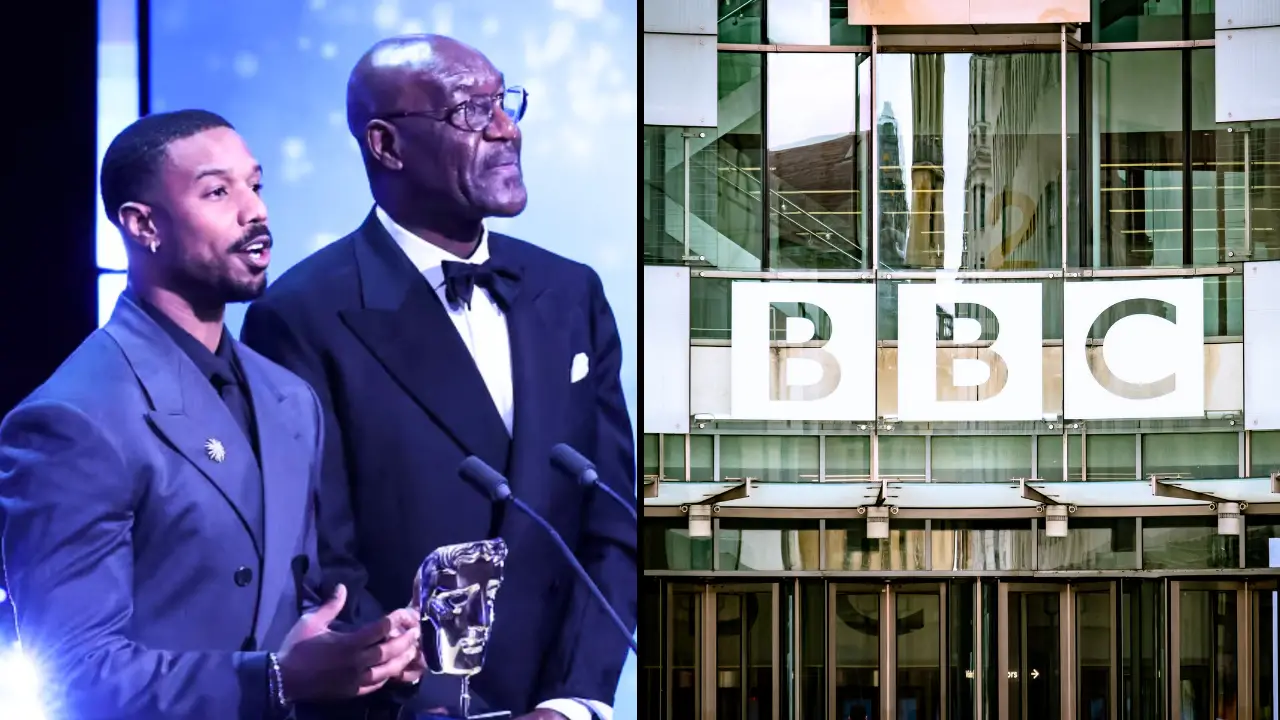
Early in the evening, as Sinners stars Michael B. Jordan and Delroy Lindo, two Black men, took to the stage at London’s Royal Festival Hall to present the Best Visual Effects award, a voice rang out from the audience.
It was Davidson, whose tics had already been audible several times throughout the night, shouting the N-word in the packed auditorium.
BAFTA host Alan C***ing addressed the room twice, telling the audience: “Tourette syndrome is a disability, and the tics you’ve heard tonight are involuntary, which means the person who has Tourette syndrome has no control over their language. We apologise if you are offended tonight.”
Davidson reportedly left the auditorium of his own accord midway through the evening, watching the remainder of the ceremony backstage.
In a later statement, he said he was ‘deeply mortified if anyone considers my involuntary tics to be intentional or to carry any meaning,’ adding that he left because he was ‘aware of the distress my tics were causing.’
What transformed a painful but complicated live incident into a full-blown institutional scandal was what happened next, or rather, what didn’t happen.
The BBC broadcast the BAFTA ceremony on a two-hour tape delay, meaning producers had a full two hours to review, edit, and clean up the footage before it went to air on BBC One.
The racial slur was not removed. It aired to the nation’s living rooms and then sat on BBC iPlayer for approximately 15 hours before the broadcast was finally pulled down and re-edited.
The fact that this was a recorded broadcast, not a live slip, is what many found most inexcusable. There was time. There was an opportunity. And still, it aired.
One fan called the incident ‘sickening,’ while another called for a boycott of the BBC over the controversy.

Jamie Foxx weighs in
The backlash from within the entertainment industry was swift and fierce.
Jamie Foxx, one of Hollywood’s most prominent Black stars, commented beneath a post about the incident on social media with blunt language: “Unacceptable,” he wrote, and then, referring to Davidson: “Nah he meant that shit.”
It was an explosive take that reflected a broader scepticism among some observers unwilling to accept the medical explanation, regardless of how well-documented Davidson’s condition is.
Journalist Jemele Hill captured a sentiment felt by many Black viewers, writing that: “Black people are just supposed to be ok with being disrespected and dehumanised so that other people don’t feel bad.”
Radio host Charlamagne tha God echoed the cynicism, suggesting it was ‘just convenient he saved his most offensive outburst for Black people.’
Delroy Lindo speaks out
While both Jordan and Delroy Lindo have yet to release formal public statements, Lindo told a Vanity Fair reporter at an afterparty that he and Jordan ‘did what we had to do’ by remaining composed at the podium, but that he wished ‘someone from BAFTA spoke to us afterwards.’
That lack of direct aftercare, the fact that two Black men absorbed a racial slur in front of a room full of celebrities and cameras and were apparently left to carry on without so much as a check-in, became a focal point of the criticism aimed at BAFTA.
Sinners’ production designer Hannah Beachler, who revealed she had also had a slur directed at her during the evening, was particularly pointed in her criticism of BAFTA’s handling.
“I know we must handle this with grace and continue to push through,” she wrote on social media. “But what made the situation worse was the throwaway apology of ‘if you were offended’ at the end of the show.”

The BBC apologizes
Under mounting pressure, the BBC issued an apology on Sunday evening, stating it was sorry that the language ‘was not edited out prior to broadcast’ and confirming the clip would be removed from iPlayer.
BAFTA followed on Monday with its own statement, acknowledging ‘very offensive language that carries incomparable trauma and pain for so many,’ taking ‘full responsibility’ and pledging to learn from the incident.
Conservative Party leader Kemi Badenoch was among the most prominent public voices to criticise the BBC directly, calling it ‘a horrible mistake’ on ITV’s Good Morning Britain.
BBC producers working the ceremony told the corporation that they simply did not hear the slur in the moment; they were operating from a production truck and said the outburst did not register among the noise of the evening, per the Guardian.
Multiple other instances of language were caught and removed during the edit, but this one slipped through entirely undetected, sitting in the finished broadcast unchallenged until the public outcry made it impossible to ignore.
What the BBC did cut
And that is where the story becomes most uncomfortable for the BBC.
While the N-word went out unchecked and sat on iPlayer for hours, the same editorial team made several other deliberate cuts.
Outstanding British Debut winner Akinola Davies Jr., whose film My Father’s Shadow drew on the stories of economic migrants and those living under occupation, closed his acceptance speech with the words ‘Free Palestine’ – that portion was removed from the broadcast entirely, per Deadline.
BAFTA host Alan C***ing made a joke that appeared to reference Donald Trump, also cut.
Best Film and Best Director winner Paul Thomas Anderson said the word ‘p***’ in his speech – it was bleeped.
The asymmetry of those choices has proven impossible to ignore, and for many, it tells a story all its own about which words the BBC deemed worthy of editorial intervention, and which it did not.
Donald Trump Issues Chilling Threat To Grammys Host Over Brutal Joke About Him At Awards
Bad Bunny Won’t Get Paid For His Super Bowl Halftime Show
The post BBC Sparks Outrage For Cutting Two Words At The BAFTAs While Airing The N-Word appeared first on It’s Gone Viral.
Tags: #BBC #Sparks #Outrage #Cutting #Words #BAFTAs #Airing #NWord