One controversial movie was so brutal that it ended up being banned in multiple countries.
Some films push the boundaries of taste and decency so far that entire governments feel compelled to step in.
Throughout cinema history, a handful of movies have been deemed so dangerous, so disturbing, or so morally reprehensible that authorities have taken the extraordinary step of banning them outright.
From Salo to Crash, controversial cinema has always found a way to provoke.
But one film from the late 1970s stands in a category entirely its own — so reviled, so relentlessly brutal, and yet so fiercely defended, that the debate surrounding it has never truly gone away.
A different kind of controversial
Most banned films earn their notoriety through political provocation, religious offense, or stylized violence. This one is different.
Where other controversial titles of its era leaned into slick production values or artistic abstraction to soften the blow, this film strips everything back to raw, uncomfortable reality.
There’s no score to manipulate your emotions, no glossy cinematography to put distance between you and what you’re watching. Critics and defenders alike agree on at least one thing: it is not an easy watch.
It emerged from the same murky waters as other so-called ‘video nasties’ — low-budget exploitation films that flooded the newly born home video market in the late 1970s and early 1980s.
Titles like Cannibal Holocaust, The Last House on the Left, and Driller Killer were all swept up in the same moral panic. But while many of those films have faded into cult obscurity, this one has endured, been remade, spawned sequels, and continued to divide audiences and critics for nearly five decades.
What the film is actually about
The story, on its surface, is stripped down to the bone. A young woman — a writer from New York named Jennifer — rents an isolated cabin in rural Connecticut, seeking the peace and quiet she needs to finish her novel.
Instead, she attracts the attention of a group of local men, who subject her to a prolonged and savage s**ual assault spanning nearly 25 minutes of screen time. Left for dead, Jennifer slowly recovers — and then, one by one, she hunts her attackers down.
The revenge killings are methodical and merciless: death by hanging, axe, boat propeller, and, most infamously, castration.
The film’s writer and director has always maintained that his intentions were entirely feminist — to depict the horror of r*** with unflinching honesty and to restore agency to the victim.
He was reportedly inspired by a real-life encounter in 1974, when he discovered a r*** survivor, naked and bloodied, stumbling through a park.
His experience watching police interrogate the traumatized woman immediately, despite her serious injuries, reportedly left him furious — and determined to make a film that took the crime seriously.

The critics sharpened their knives
If the director hoped for a sympathetic reception, he was to be sorely disappointed.
The critical response was nothing short of savage. Legendary film critic Roger Ebert called it ‘a vile bag of garbage,’ per the London Economic, while his co-presenter Gene Siskel declared it the most offensive film he had seen in his eleven years of reviewing.
The two were so appalled that they reportedly protested outside cinemas in Chicago, and their campaign successfully got the film pulled from screens after just one week.
The irony, of course, is that the outrage did the film no harm at all. When the newly emerging home video market exploded, curious consumers sought it out in droves.
It entered the top 40 best-selling videotapes and held a spot there for 14 weeks, even winning a Billboard Number One Award — beating out mainstream titles including Grease and The Godfather Part II.
The director himself later wryly credited Ebert as ‘one of the best promoters ever for this movie.’

Why countries moved to ban it
In the United Kingdom, the film landed squarely in the crossfire of one of the most intense censorship battles in broadcasting history.
Per the Telegraph, it was prosecuted under the Obscene Publications Act the distributor was ordered to destroy its master copy and promotional materials, and police seized 234 copies from the distributor’s offices.
At one point, simply owning a copy was a criminal offense. The controversy surrounding this film and others like it directly contributed to the passing of the Video Recordings Act of 1984, which brought the home video market under formal regulation for the first time.
The British Board of Film Classification didn’t grant the film a release until 2001 — and even then, it demanded over seven minutes of cuts, citing concerns about what it described as eroticized depictions of r***, a characterization that many viewers and scholars have strongly disputed.
Even the version available in the UK today still has nearly three minutes of footage missing. A fully uncut release remains unlikely.
Beyond Britain, the film was banned or heavily restricted across multiple countries, and its reputation as one of the most dangerous films ever made followed it for decades.
The BBFC’s examining team reportedly used it as a training tool for new examiners, screening it periodically to illustrate the outer edges of what the board considered acceptable.

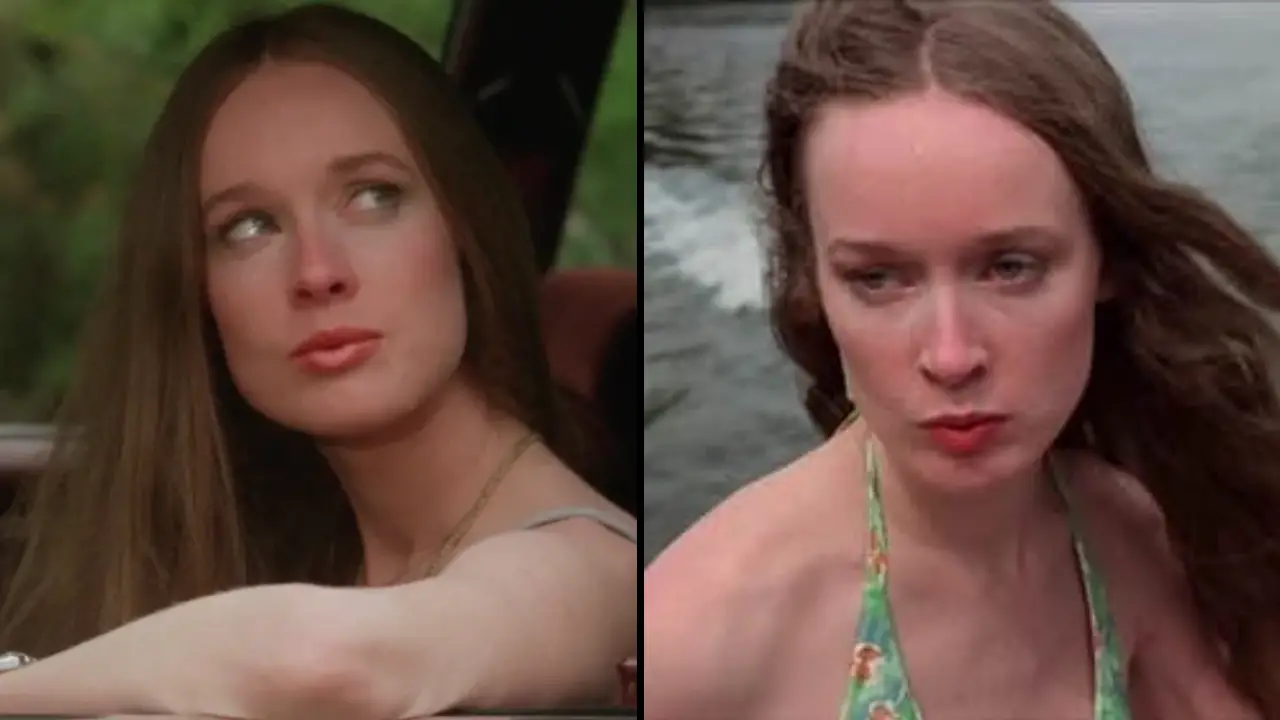
The movie is I Spit on Your Grave, released in 1978 and written and directed by Meir Zarchi, starring Camille Keaton.
Originally titled Day of the Woman — a title Zarchi has always preferred — it was renamed by its distributor in 1980 in a bid to maximize its exploitation market appeal.
Nearly 50 years on, the debate has never been settled. Is it feminist provocation or misogynistic sleaze? Exploitation cinema or genuine social commentary?
Even feminist writer Julie Bindel, who once picketed screenings of the film, later reversed her position, arguing that at least it doesn’t dress up r*** as something the justice system can neatly resolve. Camille Keaton herself calls it ‘both exploitation and a feminist movie.’
What’s undeniable is that I Spit on Your Grave remains one of the most viscerally powerful and persistently troubling films ever made — and the most controversial movie nobody can agree on.
Gruesome Horror Movie Has ‘Most Traumatizing’ Opening Scene In History
Brutal Horror Movie Is So Messed Up It’s Banned In More Than 40 Countries
The post ‘Most Controversial’ Movie Ever Made Was So Brutal It Was Banned in Multiple Countries appeared first on It’s Gone Viral.
Tags: #Controversial #Movie #Brutal #Banned #Multiple #Countries