Black people with Tourette’s have spoken out after the N-word was shouted at the BAFTAs.
The 2026 BAFTA Awards were meant to be a night of celebration, particularly for I Swear, a critically acclaimed British film about a Scottish man’s lifelong struggle with Tourette’s syndrome.
Instead, the ceremony has become the centre of a raw, urgent conversation about race, disability, and what happens when two forms of human vulnerability collide in the most public way imaginable.
The moment that sparked it all came early in the night.
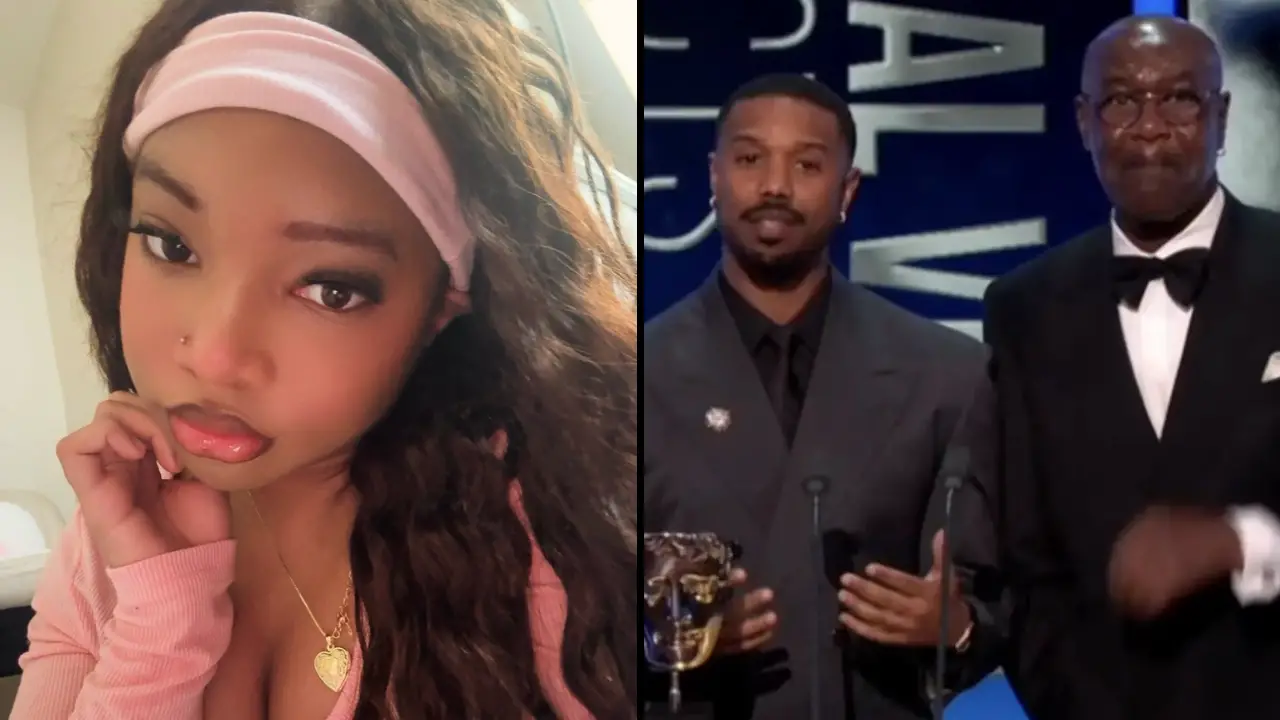
As Sinners stars Michael B. Jordan and Delroy Lindo, both Black men, took the stage at London’s Royal Festival Hall to present the award for Best Visual Effects, a voice rang out from the audience shouting the N-word.
The source was John Davidson, the Tourette’s campaigner whose life inspired the very film being celebrated.
Davidson was diagnosed with Tourette’s when he was 25, and his symptoms, including coprolalia, the involuntary utterance of socially inappropriate words or slur, had been audible several times already that evening, per Out Magazine.
He later left the auditorium of his own accord, watching the rest of the show on a screen backstage.
The BBC, broadcasting the show on a two-hour tape delay, did not edit out the slur. Both BAFTA and the BBC subsequently apologized.
But it was the voices of Black people with Tourette’s syndrome that offered some of the most powerful and complicated responses.
The broader backlash
Not everyone was able to extend compassion in two directions at once. Jamie Foxx commented that Davidson ‘meant that s***,’ while radio host Charlamagne tha God said it was ‘just convenient he saved his most offensive outburst for Black people.’
Journalist Jemele Hill wrote that “Black people are just supposed to be ok with being disrespected and dehumanised so that other people don’t feel bad,” for Fox News.
These reactions are understandable. The N-word is not merely offensive language; it is a word freighted with centuries of violence and dehumanisation.
Hearing it shouted in a public room at two Black men who were doing nothing but presenting an award is viscerally painful, regardless of the source.
As one Variety commentator who identifies as Black and Puerto Rican wrote: “The N-word is not merely ‘strong language.’ It is a brutal slur tied to enslavement, violence and dehumanization, and it is still weaponized today.
“For Black artists… hearing it in that setting, and then watching it be broadcast into homes, turned into a meme and shared on social media, carries a weight that does not disappear simply because the source lacked intent.”
But disability advocates, including Black ones, pushed back on the assumptions embedded in some of the outrage.
Tourette’s advocate Marc Giguere wrote on social media: “Coprolalia is a debilitating and life-disrupting condition I wouldn’t even wish on my worst enemy. You know how mad you are about the BAFTA situation? Imagine everyone around you is that mad at you all the time, every day, in every situation, every time you leave the house,” per Newsweek.

What BAFTA and the BBC got wrong
Whatever one concludes about Davidson’s tics, the institutional failures of the evening are harder to defend.
The BBC used its two-hour tape delay to edit out a filmmaker’s ‘Free Palestine’ declaration and to bleep a mild expletive from a director’s acceptance speech, yet left the racial slur untouched and uploaded to iPlayer, where it remained for 15 hours. The asymmetry is glaring.
Davidson’s own statement (via Deadline) expressed that he was ‘deeply mortified if anyone considers my involuntary tics to be intentional or to carry any meaning,” and confirmed he left the ceremony early because he was “aware of the distress my tics were causing.’
But notably, he did not address Jordan or Lindo directly. Lindo, for his part, told Vanity Fair that he and Jordan ‘did what we had to do,’ and that he wished ‘someone from BAFTA spoke to us afterward.’
That failure of aftercare, the leaving of two Black men to absorb a racial slur and carry on presenting without so much as a check-in, is what many found most telling about the evening.
The incident has forced a wider reckoning with what inclusion truly requires when the needs of one community can directly impact another, Hip Hop Vibe reports.

“I’m Black, and I also have the N-word as a tic.”
The most widely shared voice in the immediate aftermath belonged to Shay Amamiya, a Black TikToker and Twitch streamer with nearly one million followers who goes by @sh4ysgrwm.
In a video addressed to her followers, she said she had seen widespread outrage, including claims that Davidson must have intended the slur or that it reflected his vocabulary.
She warned that these assumptions deepen stigma for people with coprolalia, calling it ‘very embarrassing’ and saying many people living with the condition were now watching strangers ‘hating on your condition,’ per Newsweek.
Her words cut to the heart of the matter. “I’m Black, and I also have the N-word as a tic,” she said. “I have other slurs as tics. Does this mean that I use them regularly?”
She explained that people often experience tics during tense, silent, or high-pressure moments, precisely the kind of atmosphere an awards ceremony creates, and urged people not to direct their anger at disabled people.
Her message resonated because it refused to simplify. She stressed that while the condition can cause uncontrollable speech, that reality does not erase the harm experienced by those targeted.
She held both truths at once: disability deserves understanding, and Black people deserve protection from racial harm.

A politician with personal experience
New York City Public Advocate Jumaane Williams posted on social media that his own experience with Tourette’s made him want to correct misperceptions.
“As the first known person to be elected with #Tourettes. As a person who has #coprolalia and also tics the ‘N-word.’ As a Black man I have some lived views and thoughts to share,” he wrote, urging people to research coprolalia before weighing in further, shares The Hollywood Reporter.
Williams, a prominent Black elected official who has been open about his Tourette’s diagnosis for years, represents something rare in this debate: someone who inhabits both identities simultaneously.
His measured, personal intervention was a reminder that the condition does not discriminate by race, and that some of the people most affected by coprolalia’s cruellest manifestations are Black people themselves, forced to live with tics that produce some of the most painful language in the English language.
A condition misunderstood by most
Part of what makes this incident so difficult to process is that the general public’s understanding of Tourette’s syndrome is severely limited.
Dr. Adjoa Smalls-Mantey, an emergency psychiatrist in New York City and president of the New York County Psychiatric Society, explains to HuffPost that ‘one of the things that we do see in tic disorders, and especially with coprolalia, is that these urges and tics come when you’re under high-stress, or even periods of excitement.’
A glittering awards ceremony, packed with celebrities, cameras, and emotional stakes, is precisely the kind of environment that can trigger the most severe outbursts.
Smalls-Mantey also noted that the BAFTA incident presented a dual opportunity: better funding for research into Tourette’s, and a deeper societal reckoning about race and ‘who matters,’ pointing to the BBC’s conscious decision not to remove the slur from the broadcast as revealing in itself.
For Tourette’s advocates who are also Black, the week has been exhausting in a particular way.
They have had to simultaneously defend the neurological reality of involuntary tics, mourn the pain inflicted on Jordan and Lindo, and watch as public discourse collapsed into camps that seemed unable to hold more than one truth at a time.
Donald Trump Issues Chilling Threat To Grammys Host Over Brutal Joke About Him At Awards
Bad Bunny Won’t Get Paid For His Super Bowl Halftime Show
The post Black People With Tourette’s Speak Out After N-Word Shouted At BAFTAs appeared first on It’s Gone Viral.
Tags: #Black #People #Tourettes #Speak #NWord #Shouted #BAFTAs